In an AI world, your varied career isn't a liability. It's your edge.
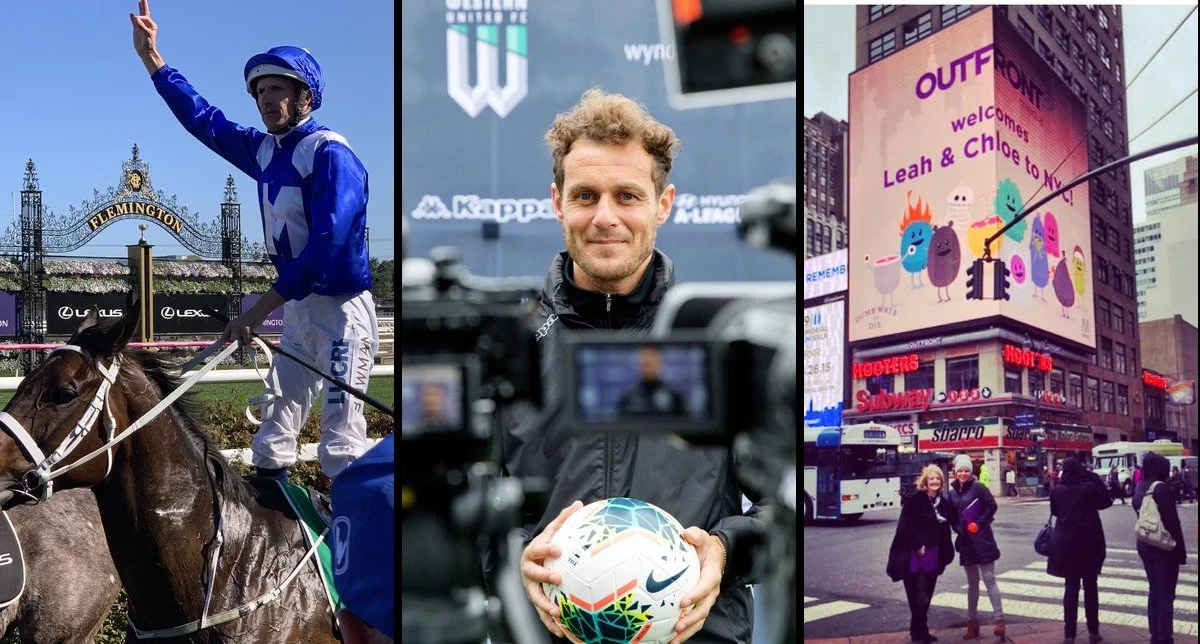
Varied experiences, a lifetime of memories.
For better or worse, I have never really planned my career too far into the future. Nor have I ever put the money ahead of the excitement of the brief.
From agency life, I jumped at the chance to introduce the Metro Trains brand to Melbourne. The brief, essentially, was to make people not hate them and improve customer satisfaction. Seven years later, safely settled in that role, I left for the Victoria Racing Club and the opportunity to work on one of the biggest sporting events in the world. And then, comfortable again, I jumped once more into the unknown world of building a football club from scratch in the paddocks beyond the edge of suburbia, with a start-up budget, no audience and no idea about the offside rule.
Was I crazy? Possibly. It does read that way on paper.
Now, as I look at what's next, I can't help but wonder.
Did chasing the exciting brief, the challenging project, set me up for future failure? Would I be better placed today if I'd stayed steadfast in one category?
It's a question a lot of people I know are asking right now as they look for their ‘next move’. And the answer coming back from the market seems to be yes. The safe choice, the popular choice, is the same category hire, the carbon copy of whoever sat in the seat before. Zoom in, not out.
But here's what that logic misses.
Each of those environments I walked into required a completely different version of leadership. At Metro I worked alongside engineers and corporate operators. Methodical, process-driven, risk-aware. Getting a genuinely strange creative idea across the line in that environment required a different kind of persuasion than anything I'd learned before. At the VRC, marketing one of the most iconic sporting events on earth, I was navigating a world of glamour and tradition on one side and on the other, one of the most dedicated and grounded industries I've ever encountered. People for whom 3am is a normal start and who’d prefer the back of the float with a cuppa to The Birdcage. Two completely different cultures inside the same organisation, both of whom needed to believe in what we were doing.
At Western United it was a kaleidoscope of people. Football lifers and coaches who'd bled the game their whole careers, property developers who'd built fortunes on backing themselves, and government partners who never missed a dot on an i or a cross on a t but cared fiercely for the community they represented. All three, regularly, in the same room. Then the challenge of resources. A total marketing budget reflecting that closer to a monthly forecast of previous roles and a team not even big enough to form an on-pitch defence. This 360 forces you to be your best, to challenge your mind to think differently, take risk, trust without evidence and be grittier than ever before.
You don't learn to read rooms or build strategy to different resource levels by staying in one place. And that ability to adapt, to build trust across completely different human environments, to figure out how to get things done with different people and different constraints, sits underneath everything else that makes a marketer effective. Even more so as we strap in for the AI-led future of brand, marketing and communications.
The fundamentals travel across every category. Audience insight. Brand clarity. Storytelling. Clean execution. Knowing the difference between a brand people need to like and a brand people need to love. What doesn't travel is assumption. When you've only ever worked in one environment it's hard to know which of your instincts are principles and which are just habits you've never had reason to question.
That's what varied experience gives you. Not just a broader CV. A different kind of thinking.
What I've observed is that the briefs asking for transformation and step-change keep going out to market. And the hires keep defaulting to familiarity, I’m sure for a rebuttle to this article that’s steadfast. But I do think the conversation is worth having — because the people being screened out for not having the exact right category experience are often exactly the ones the brief was written for.
In a world where AI can absorb category knowledge in seconds, the thing that actually differentiates a marketer is harder to name but easier to recognise. It's the judgment built from genuinely different experiences. The adaptability that only comes from having had to start again in a new room with new people and new rules.
As for me, would I change anything?
The whirlwind of taking Dumb Ways to Die global. The chill I still feel thinking about 100,000 people falling silent before the Melbourne Cup as we broadcast live to Twitter. The mental strength and grit that only comes from six years building something from nothing.
No. I wouldn't change a thing.
